Introduction To Weird Wealth
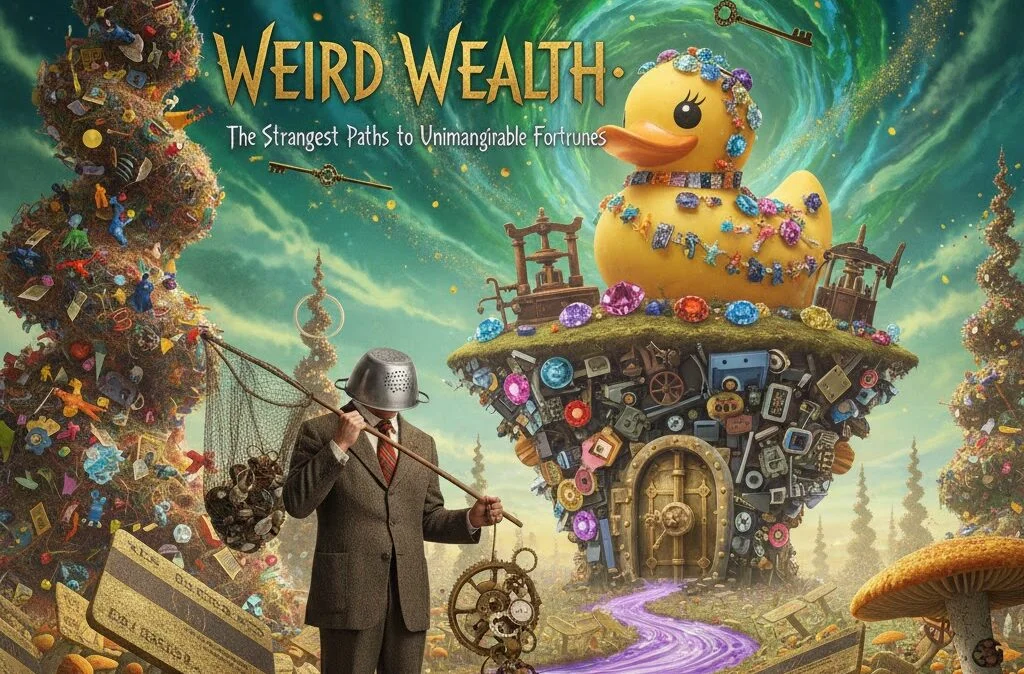
The traditional idea of wealth has long been associated with stable careers, blue-chip stocks, real estate, and inheritance. But in the modern digital economy, a new and fascinating phenomenon has emerged: Weird Wealth.
Weird Wealth refers to unconventional, unexpected, and often misunderstood ways people accumulate significant financial success. From selling virtual real estate and digital collectibles to monetizing obscure skills, niche audiences, and internet subcultures, Weird Wealth challenges everything we once believed about money, work, and value.
Defining Weird Wealth in the Modern Economy
What Makes Wealth “Weird”?
Weird Wealth isn’t about randomness or luck alone. It’s defined by three core characteristics:
- Nontraditional income sources
- High asymmetry between effort and reward
- Cultural or technological leverage
Examples include:
- YouTubers earning millions from niche hobbies
- NFT creators selling digital art for six figures
- Online educators monetizing micro-expertise
- Influencers building businesses from memes
Unlike conventional wealth, Weird Wealth often feels counterintuitive—until it works.
Weird Wealth vs Traditional Wealth
| Traditional Wealth | Weird Wealth |
|---|---|
| Linear career paths | Nonlinear opportunities |
| Predictable income | Volatile but scalable |
| Credential-based | Attention-based |
| Institutional trust | Community trust |
Both can coexist, but Weird Wealth thrives where attention, creativity, and leverage intersect.
The Economic Forces Fueling Weird Wealth
The Internet as a Wealth Multiplier
The internet has eliminated geographic and institutional gatekeepers. Today, anyone with:
- A smartphone
- A niche audience
- A monetizable idea
can participate in wealth creation.
Platforms like YouTube, TikTok, Substack, Shopify, and Patreon allow creators to own distribution, which is a critical driver of Weird Wealth.
The Creator Economy Explosion
According to data from Goldman Sachs, the global creator economy is projected to surpass $480 billion by 2027. This ecosystem enables individuals to monetize:
- Personality
- Knowledge
- Entertainment
- Community
Weird Wealth often emerges where creators serve small but deeply engaged audiences.
Financialization of Everything
Modern markets now assign value to things once considered worthless:
- Digital skins
- Virtual land
- Online identities
- Social influence
This financialization has expanded the definition of assets—and created new paths to Weird Wealth.
Real-World Examples of Weird Wealth
Digital Collectibles and NFTs
NFTs represent one of the most controversial Weird Wealth vehicles. While speculative, they’ve created real fortunes.
Examples include:
- Artists selling single NFTs for millions
- Early adopters flipping digital assets
- Game developers monetizing virtual items
Key insight: Weird Wealth rewards early understanding, not late hype.
Influencer-Led Businesses
Many influencers earn more from backend businesses than content itself:
- Private communities
- Courses and coaching
- Brand licensing
- Digital products
These income streams often appear “weird” from the outside but are built on trust and audience loyalty.
Hyper-Niche Expertise
Some individuals earn six or seven figures by teaching extremely specific skills, such as:
- Spreadsheet automation
- AI prompt engineering
- Online arbitrage
- Obscure software workflows
Weird Wealth thrives in niches others ignore.
The Psychology Behind Weird Wealth

Why Weird-Wealth Feels Uncomfortable
Humans are wired to distrust unfamiliar paths. Weird Wealth challenges:
- Traditional success narratives
- Social expectations
- Risk tolerance
Because it often lacks institutional validation, people dismiss it—until results appear.
Risk, Identity, and Status
Weird-Wealth requires:
- High tolerance for uncertainty
- Willingness to look foolish early
- Detachment from social approval
Ironically, these traits also define many high-net-worth individuals.
Is Weird-Wealth Sustainable?
Short-Term Wins vs Long-Term Stability
Not all Weird-Wealth lasts. Sustainability depends on:
- Skill transferability
- Brand strength
- Community depth
- Adaptability
The most durable Weird-Wealth creators treat income as a system, not a one-time event.
Building Defensible Weird Wealth
To make Weird-Wealth last:
- Diversify income streams
- Own your audience (email, community)
- Reinvest into stable assets
- Continuously upskill
Weird doesn’t mean reckless—it means unconventional.
Risks and Misconceptions About Weird-Wealth
Survivorship Bias
Social media highlights winners, not failures. For every success story, many attempts fail. Understanding risk is crucial.
Platform Dependency
Relying on a single platform is dangerous. Algorithms change, policies shift, and accounts disappear.
Financial Volatility
Weird-Wealth income can fluctuate dramatically. Without planning, cash flow instability becomes a major threat.
How to Pursue Weird Wealth Strategically
Identify Your Leverage
Ask:
- What do I know that others don’t?
- Where do my interests overlap with demand?
- Can I scale this digitally?
Start Small, Test Fast
Weird-Wealth often begins as a side project:
- A blog
- A YouTube channel
- A digital product
- A niche service
Low risk, high learning.
Focus on Value, Not Virality
Sustainable Weird-Wealth is built on usefulness and trust, not fleeting attention.
The Future of Weird-Wealth
AI and Automation
AI is accelerating Weird-Wealth creation by:
- Lowering skill barriers
- Increasing output
- Enabling solo entrepreneurs
Those who adapt early gain disproportionate rewards.
Decentralized Finance and Ownership
Blockchain, DAOs, and digital ownership models may further redefine how Weird-Wealth is created and distributed.
Cultural Acceptance
What feels weird today often becomes normal tomorrow. Many Weird-Wealth paths will eventually be institutionalized.
Internal Linking Suggestions
To strengthen SEO and user engagement, consider linking to:
- Articles on passive income ideas
- Guides on creator economy monetization
- Resources on digital entrepreneurship
- Posts about financial independence strategies
External Authoritative References
For credibility and trustworthiness, reference:
- Goldman Sachs (creator economy research)
- Harvard Business Review (future of work)
- McKinsey & Company (digital economy trends)
- World Economic Forum (technology and finance reports)
Frequently Asked Questions (FAQs)
Is Weird-Wealth legitimate?
Yes. While unconventional, many Weird-Wealth paths are entirely legal and profitable when approached strategically.
Can anyone build Weird-Wealth?
Not everyone will succeed, but anyone can experiment. Success depends on skills, consistency, and adaptability.
Is Weird-Wealth risky?
It can be. Risk management, diversification, and financial planning are essential.
Does Weird-Wealth replace traditional investing?
No. Many people use Weird-Wealth to supplement or accelerate traditional financial strategies.
Conclusion Why Weird Wealth Is Redefining Success
Weird Wealth isn’t a gimmick—it’s a reflection of a changing world. As technology reshapes how value is created, distributed, and perceived, unconventional paths to wealth are becoming more viable than ever.
The key takeaway? Weird doesn’t mean irresponsible. When approached with strategy, ethics, and long-term thinking, Weird-Wealth can be both profitable and sustainable.
In a world where attention is currency and creativity is leverage, Weird-Wealth isn’t just the future—it’s already here.
You May Also Read: Jim Carrey Wife