Introduction To White House Demolition
The phrase “White House demolition” often sparks curiosity, debate, and sometimes confusion. As one of the most recognizable buildings in the world, the White House symbolizes the leadership, history, and democratic ideals of the United States. Because of its cultural and political significance, rumors or discussions about demolishing the White House naturally generate attention.
However, the reality is far more nuanced. While the White House has undergone several major renovations, reconstructions, and structural restorations throughout its history, it has never been fully demolished. Understanding the difference between demolition, renovation, and restoration is essential when exploring the history of the building.
The Historical Importance of the White House
The White House Demolition is more than just the residence of the President of the United States—it is an enduring symbol of American governance and history.
Construction of the White House began in 1792, based on a design by Irish-born architect James Hoban. The building was completed in 1800, when President John Adams became the first president to reside there.
Located at 1600 Pennsylvania Avenue NW in Washington, D.C., the White House Demolition has served as the home and workplace for every U.S. president since Adams. Over time, it has witnessed some of the most pivotal moments in American history, including diplomatic meetings, war decisions, and historic legislation.
Key features of the White House include:
- The Executive Residence
- The West Wing
- The East Wing
- The Oval Office
- The Rose Garden
Because of its national importance, the idea of White House demolition is largely hypothetical and often arises from misunderstandings of past reconstruction projects.
The Burning of the White House in 1814
One of the most dramatic moments in the building’s history occurred during the War of 1812, when British troops set fire to the White House in 1814.
Although the building was heavily damaged, it was not demolished. Instead, much of the structure remained standing, particularly the exterior sandstone walls.
What Happened During the Attack?
During the conflict between the United States and Great Britain, British forces captured Washington, D.C. On August 24, 1814, they set fire to several government buildings, including:
- The White House Demolition
- The U.S. Capitol
- The Treasury building
The fire destroyed much of the interior, but the structure survived. Architect James Hoban was brought back to supervise restoration work, which began almost immediately.
By 1817, President James Monroe moved into the restored building.
This event is sometimes misinterpreted as a form of “demolition,” but in reality, it was destruction caused by war followed by reconstruction.
Major White House Renovations Throughout History
Although the White House Demolition has never been demolished, it has undergone several major renovations to modernize the structure and maintain safety.
1. Theodore Roosevelt Renovation (1902)
By the early 1900s, the White House had become overcrowded and outdated.
President Theodore Roosevelt launched a large renovation project that:
- Modernized the building
- Created the West Wing
- Relocated presidential offices outside the residence
This renovation transformed the White House into a more functional workplace.
2. Truman Reconstruction (1948–1952)
The most extensive reconstruction in White House Demolition history occurred during the presidency of Harry S. Truman.
By the late 1940s, structural engineers discovered that the building was close to collapse. Floors sagged, walls cracked, and the structure was dangerously unstable.
What Was Done?
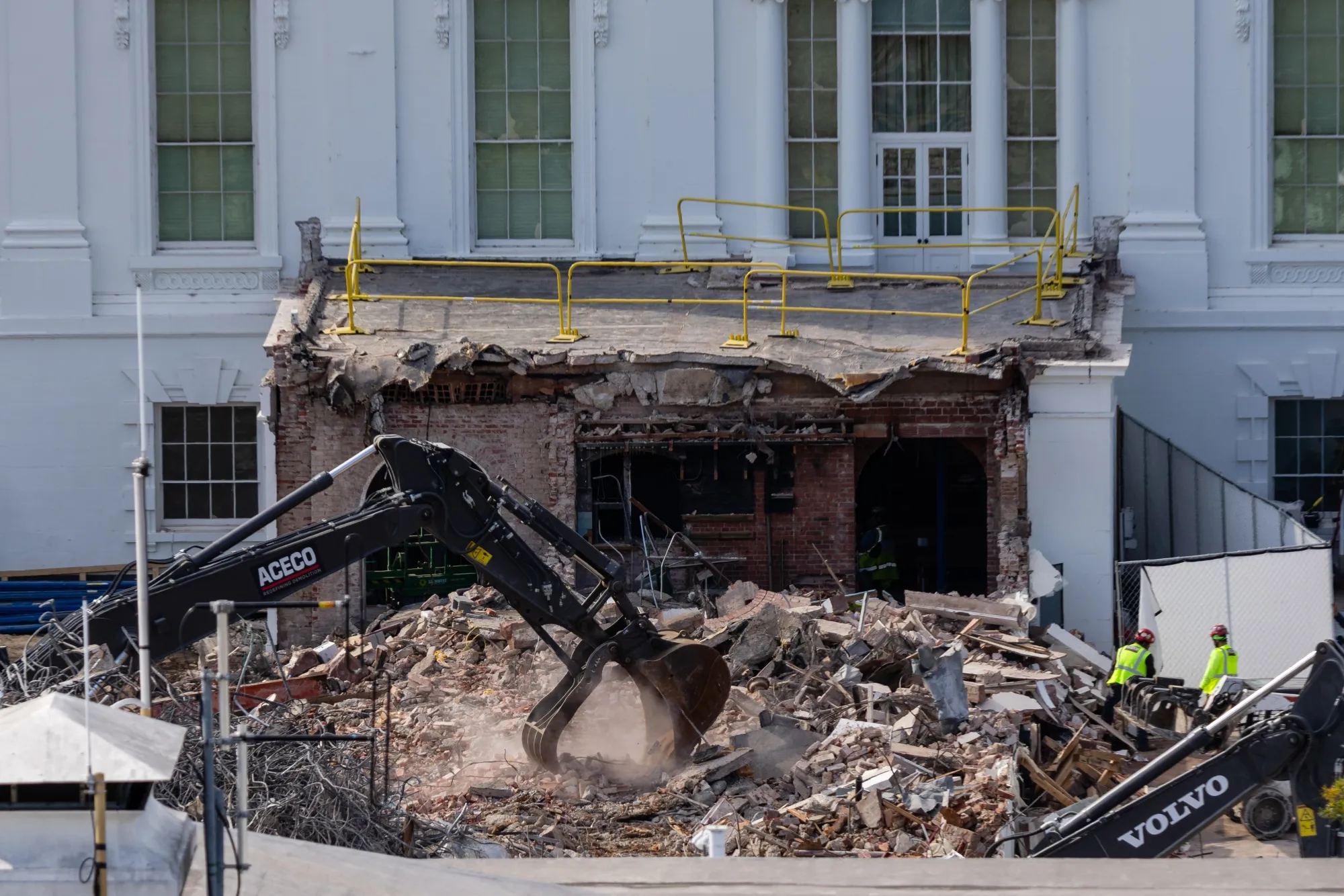
The entire interior of the White House was completely dismantled, leaving only the outer walls standing.
The reconstruction included:
- Installing a new steel framework
- Rebuilding interior floors and rooms
- Modernizing plumbing, electricity, and HVAC systems
Although the interior was rebuilt, the exterior remained intact. Because of this, historians do not consider the project a White House demolition, but rather a full structural reconstruction.
President Truman moved back into the building in 1952.
Why the White House Has Never Been Demolished
The idea of demolishing the White House is extremely unlikely for several reasons.
1. National Symbolism
The White House Demolition is one of the most important symbols of the United States. Demolishing it would erase a key piece of national heritage.
2. Historical Preservation Laws
The United States has strong preservation laws protecting historic structures. The White House Demolition is protected as a National Historic Landmark.
Organizations like:
- The National Park Service
- The White House Historical Association
ensure the building remains preserved for future generations.
3. Cultural Significance
Millions of people visit the White House Demolition every year, and it plays a central role in American identity.
Because of this cultural importance, the focus is always on restoration and preservation, not demolition.
Common Myths About White House Demolition
Despite the facts, rumors about demolishing the White House sometimes circulate online.
Let’s explore some common misconceptions.
Myth 1: The White House Was Demolished During Truman’s Presidency
This myth stems from the extensive reconstruction project in the late 1940s.
While the interior was removed and rebuilt, the outer walls remained, meaning the building was technically preserved.
Myth 2: Plans Exist to Replace the White House
There are no credible plans to demolish or replace the White House Demolition. Renovation and modernization projects are occasionally proposed, but demolition has never been seriously considered.
Myth 3: The White House Is Structurally Unsafe
Modern engineering upgrades have ensured the building is structurally sound and secure.
Architectural Features That Make the White House Unique
The architecture of the White House is a major reason it has been preserved rather than demolished.
Neoclassical Design
James Hoban designed the White House Demolition using a neoclassical architectural style, inspired by European palaces and classical Roman architecture.
Key design elements include:
- Symmetrical façade
- Columned porticos
- Elegant proportions
- Decorative moldings
Materials Used
The building is constructed primarily from:
- Sandstone
- Brick
- Steel framework (added during Truman reconstruction)
The famous white appearance comes from layers of white paint applied to protect the stone.
Security and Modernization of the White House
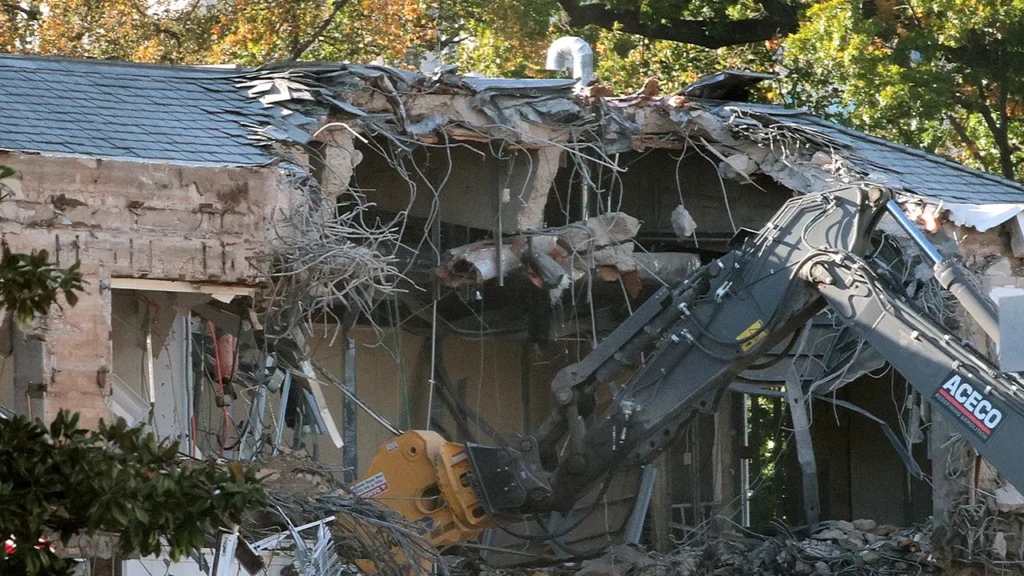
In addition to historical preservation, the White House Demolition has undergone significant upgrades for security and modern functionality.
Security Enhancements
After several security incidents and the events of September 11, 2001, the White House complex received major security upgrades, including:
- Reinforced windows
- Advanced surveillance systems
- Restricted airspace
- Protective barriers
Technological Upgrades
Modern presidents rely heavily on technology, so the building has been updated to include:
- Secure communication networks
- Digital infrastructure
- Advanced cybersecurity systems
These updates allow the White House to function as a modern command center while maintaining its historic appearance.
Could the White House Ever Be Demolished?
From a practical perspective, White House demolition is extremely unlikely.
If the building were ever to become structurally unsafe, experts would almost certainly recommend:
- Restoration
- Reconstruction
- Reinforcement
rather than demolition.
Historic buildings around the world—such as Buckingham Palace in the UK—are preserved using similar methods.
The Role of the White House Historical Association
The White House Historical Association (WHHA) plays a crucial role in maintaining and documenting the building’s history.
Founded in 1961 by Jacqueline Kennedy, the organization works to:
- Preserve White House artifacts
- Support restoration projects
- Educate the public about presidential history
Their work ensures the building remains both historically accurate and structurally sound.
Tourism and Public Interest in the White House
Every year, millions of people travel to Washington, D.C. hoping to see the White House.
Even though public tours are limited, the building remains one of the most visited landmarks in the United States.
Visitors often explore nearby attractions such as:
- The National Mall
- The Washington Monument
- The Lincoln Memorial
Because of its popularity, discussions about White House demolition often arise simply because people are fascinated by its history.
Internal Linking Suggestions
If publishing this article on a blog or informational website, consider linking to related content such as:
- History of U.S. Presidents
- Famous Buildings in Washington, D.C.
- The Architecture of American Government Buildings
- Security Measures at the White House
These internal links help improve SEO and keep readers engaged longer.
Authoritative External References
For further reading and credible information, consider linking to these authoritative sources:
- White House Historical Association (whitehousehistory.org)
- National Park Service (nps.gov)
- Library of Congress (loc.gov)
- Smithsonian Institution (si.edu)
These sources provide verified historical information and improve the credibility of your article.
Conclusion
The idea of White House demolition is largely based on misunderstanding historical renovations and reconstructions. While the building has faced fires, structural challenges, and extensive renovations, it has never been demolished.
Instead, the White House has been carefully preserved and modernized over more than two centuries. From the rebuilding after the War of 1812 to the Truman reconstruction, each project has focused on protecting the structure while ensuring it meets the needs of modern presidents.
Today, the White House stands as a powerful symbol of democracy, history, and leadership. Rather than being demolished, it will likely continue to be preserved and restored for generations to come.
Frequently Asked Questions (FAQs)
Was the White House ever demolished?
No. The White House has never been demolished. It has undergone major renovations and reconstruction, but the original structure has always been preserved.
What happened to the White House in 1814?
British troops set fire to the White House during the War of 1812. The interior was destroyed, but the outer walls survived and the building was rebuilt.
Why was the White House rebuilt during Truman’s presidency?
By 1948, the building was structurally unsafe. The interior was dismantled and rebuilt with a steel framework to stabilize the structure.
Could the White House ever be replaced?
It is highly unlikely. Due to its historical significance and legal protections, preservation and restoration are always prioritized over demolition.
You May Also Read: Pulsamento