Introduction To Kelvin Sampson
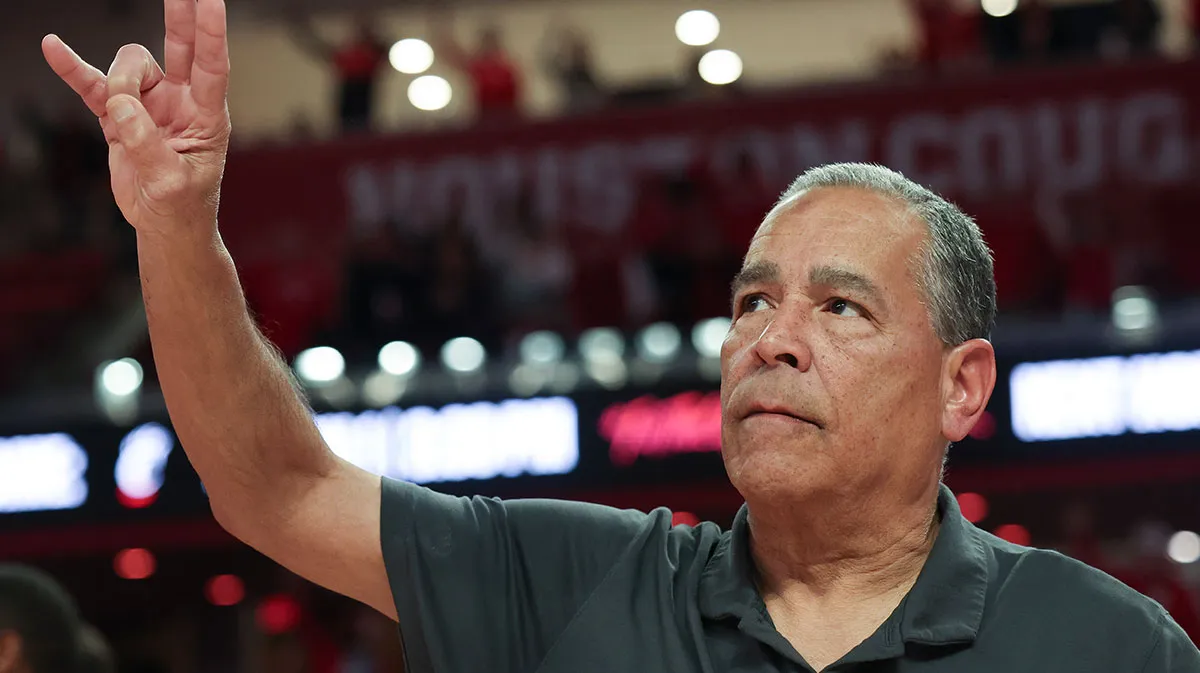
In the high-stakes world of college basketball, where one-and-done phenoms and transfer-portal chaos dominate headlines, Kelvin Sampson stands as a throwback architect—a master builder who constructs dynasties brick by brick, player by player, practice by practice. Over the past decade at the University of Houston, Sampson has transformed a dormant program into a perennial powerhouse, culminating in back-to-back Final Four appearances (2021 and 2024) and a No. 1 overall seed in the 2025 NCAA Tournament. His blueprint isn’t flashy; it’s forged in fundamentals, ferocity, and an unyielding belief that culture trumps talent. This is the story of how Sampson built a winning basketball program—not through shortcuts, but through a relentless system that turns potential into championships.
The Foundation Roots in Resilience
Kelvin Sampson’s journey began far from the bright lights of March Madness. Born in 1955 in the Lumbee Indian community of Deep Branch, North Carolina, Sampson grew up in a family of educators and athletes. His father, Ned Kelvin Sampson, was a high school coach who instilled in him the value of hard work and community. “Basketball was our escape,” Sampson once reflected in an interview with The Undefeated. “But it was also our education.”
Sampson’s collegiate playing career at Pembroke State (now UNC Pembroke) was modest—he averaged 13 points as a guard—but it was his early coaching stints that revealed his genius. Starting as a graduate assistant at Michigan State under Jud Heathcote in 1979, Sampson learned the art of player development from a Hall of Famer. He climbed the ladder: assistant at Montana Tech, head coach at the same school (where he went 73-9 from 1981-85), then Washington State (86-79 over seven seasons). But it was his 11-year run at Oklahoma (1994-2006) that put him on the map.
At Oklahoma, Kelvin Sampson inherited a program mired in mediocrity and elevated it to elite status. He led the Sooners to 11 consecutive NCAA Tournaments, including a Final Four in 2002 with players like Hollis Price and Eduardo Nájera. His record: 279-109 (.719 winning percentage). Sampson’s teams were known for suffocating defense—often ranking top-10 nationally in points allowed—and a motion offense that emphasized spacing and ball movement. Yet, controversy struck in 2006: NCAA violations involving improper phone calls to recruits led to a five-year show-cause penalty. Sampson resigned, his reputation tarnished.
Many coaches would have faded. Kelvin Sampson didn’t. He took an assistant role with the Milwaukee Bucks (2008-11), then the Houston Rockets (2011-14), honing his skills in the NBA. “The sanctions were tough,” he told Sports Illustrated in 2020. “But they taught me patience and perspective.” In 2014, at age 58, he returned to college as Houston’s head coach—a program that hadn’t won an NCAA Tournament game since 1984.
Arrival in Houston Assessing the Wreckage
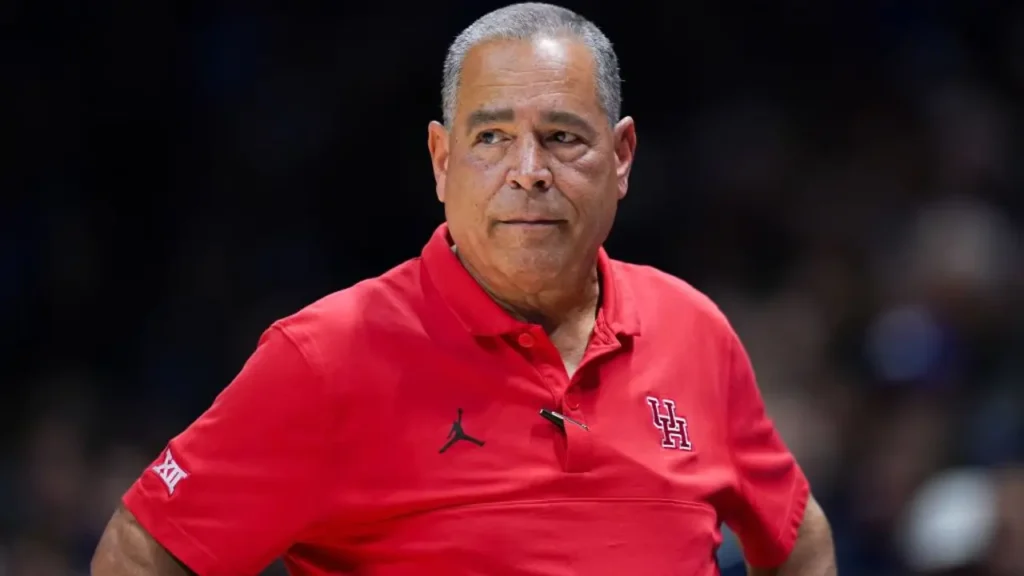
When Kelvin Sampson arrived at the University of Houston, the Cougars were a shadow of their Phi Slama Jama glory days. The program, once home to legends like Hakeem Olajuwon and Clyde Drexler, had fallen into irrelevance. From 1993 to 2013, Houston posted just three winning seasons in conference play and zero NCAA appearances. Facilities were outdated; the Fertitta Center (then Hofheinz Pavilion) was a relic. Recruiting budgets paled compared to blue-bloods.
Sampson’s first move? Strip everything to the studs. “We had to change the culture,” he said in a 2019 press conference. He implemented a “blue-collar” ethos: no excuses, maximum effort. Practices became infamous for their intensity—two-a-days, full-court drills, defensive slides until exhaustion. Sampson’s philosophy: “Talent gets you in the door; toughness keeps you there.”
He overhauled recruiting. Instead of chasing five-star recruits who might bolt after a year, Sampson targeted high-character players with chips on their shoulders—junior college transfers, overlooked high schoolers, international prospects. His 2014 class included Rob Gray, a JUCO scorer who became a legend. Early wins were scarce: 13-19 in Year 1, 22-10 in Year 2. But the foundation was set.
Pillar 1 Defensive Dominance as Identity
If there’s one hallmark of Kelvin Sampson programs, it’s defense. At Houston, the Cougars have ranked in the top 10 nationally in KenPom defensive efficiency every season since 2018-19. How does he do it?
Sampson preaches “pack-line” principles with a twist: aggressive hedging on screens, relentless closeouts, and a swarm mentality. Players rotate like clockwork, communicating constantly. “Defense is about trust,” Sampson explains. “You have to know your teammate has your back.”
Drills are meticulous. In practice, guards defend posts in the paint to build physicality. Full-court pressure forces turnovers—Houston led the nation in steal rate multiple times. Sampson’s teams rebound ferociously; since 2017, they’ve grabbed at least 35% of their own misses (top quartile nationally).
This identity paid dividends. In 2018-19, with Corey Davis Jr. and Armoni Brooks, Houston won 33 games, captured the AAC Tournament, and advanced to the Sweet 16—beating Ohio State before falling to Kentucky. It was the program’s first NCAA win in 35 years.
Pillar 2 Player Development Over Plug-and-Play
Sampson doesn’t recruit McDonald’s All-Americans en masse. His stars are made, not born. Quentin Grimes arrived as a five-star in 2018 but struggled early. Under Sampson’s tutelage—film sessions dissecting footwork, weight-room regimens adding 20 pounds of muscle—Grimes blossomed into a 2021 All-American, Big 12 Player of the Year, and NBA first-round pick (Knicks).
The list is long: DeJon Jarreau (undrafted to NBA G-League standout), Fabian White Jr. (from role player to 2022 Final Four captain), Tramon Mark (transfer portal success at Arkansas). Sampson’s staff, including assistants like Quannas White and Kelvin Sampson (his son), emphasizes individualized plans. “We develop the player, not just the basketball player,” Sampson says. Life skills, academics, mental health—all integrated.
This approach shines in the transfer era. Houston thrives on portal additions who buy in: Marcus Sasser (from walk-on candidate to 2023 AAC Player of the Year), Jamal Shead (junior college to 2024 Bob Cousy Award winner as top point guard).
Pillar 3 Culture of Accountability and Family
Walk into a Houston practice, and you’ll hear Kelvin Sampson voice booming: “Next play!” No dwelling on mistakes. Accountability is non-negotiable—miss a box-out, run suicides. But it’s balanced with love. Sampson calls his players “sons.” Team dinners, community service, fatherly advice.
The “H-Town Tough” mantra isn’t marketing; it’s lived. In 2020, amid COVID cancellations, Sampson kept the team engaged with virtual meetings and conditioning packets. The 2021 Final Four run—beating Oregon State, Syracuse, and Baylor en route—was a testament. Down 15 to Rutgers in the round of 32, Houston rallied with grit.
Sampson’s family ties deepen the bond. Kellen, his assistant, brings continuity. Players like Shead credit the staff’s stability: no turnover, unlike carousel programs.
Milestones and Momentum
The breakthroughs accelerated:
- 2019-20: 23-8, No. 1 seed potential derailed by COVID.
- 2020-21: 28-4, Final Four (lost to Baylor). First since 1984.
- 2021-22: Elite Eight, 32-6.
- 2022-23: Sweet 16, despite injuries.
- 2023-24: 32-5, Final Four again (lost to Duke). Back-to-back for the first time in program history.
- 2024-25: As of November 2025, Houston is 8-0, ranked No. 1, with wins over Auburn and Alabama. Sampson’s career record at UH: 268-74 (.784), six AAC titles, 10 NCAA bids.
Facilities upgraded too—the $60 million Fertitta Center renovation in 2018, funded by alum Tilman Fertitta, symbolizes investment mirroring Sampson’s vision.
Challenges and Adaptations
Not all smooth. The 2006 scandal lingers in some minds, though Sampson served his penalty and has been clean since. Injuries plagued 2022-23. The transfer portal tempts players; Sampson loses some but retains core groups through relationships.
He adapts: Embracing NIL (Name, Image, Likeness) ethically, partnering with boosters for collectives. Recruiting internationally—players like Mylik Wilson (France via JUCO).
Critics say his style is “old-school,” too grueling. Sampson counters: “The game hasn’t changed; effort has.” His teams’ low turnover rates and high free-throw attempts prove efficiency.
The Sampson System Replicable Blueprint
What makes Sampson’s program enduring?
- Recruit Character: GPA minimums, background checks. “I’d rather win with good kids.”
- Daily Improvement: “1% better every day.” Metrics track everything—shots made, deflections.
- Scheme Simplicity: Motion offense with five-out spacing; defense with clear rules.
- Staff Loyalty: Long-tenured assistants scout, develop, recruit.
- Community Buy-In: Houston embraces the team; sellouts routine.
Sampson’s influence extends. Former assistants coach at high levels; players like Reggie Chaney (tragically passed in 2023) embodied his legacy.
Legacy in the Making
At 70, Kelvin Sampson isn’t slowing. Contracts through 2027, whispers of NBA return dismissed. “Houston is home,” he says.
He’s built more than wins: a model for mid-majors. Programs like Florida Atlantic (2023 Final Four) cite Sampson’s influence.
In a sport of transients, Sampson proves sustainability. From Oklahoma’s ashes to Houston’s pinnacle, his story is resilience redefined. As the Cougars chase a 2025 title, one truth endures: Kelvin Sampson doesn’t just coach basketball—he builds winners, one tough, accountable brick at a time.
You May Also Read: Alexis Rodman