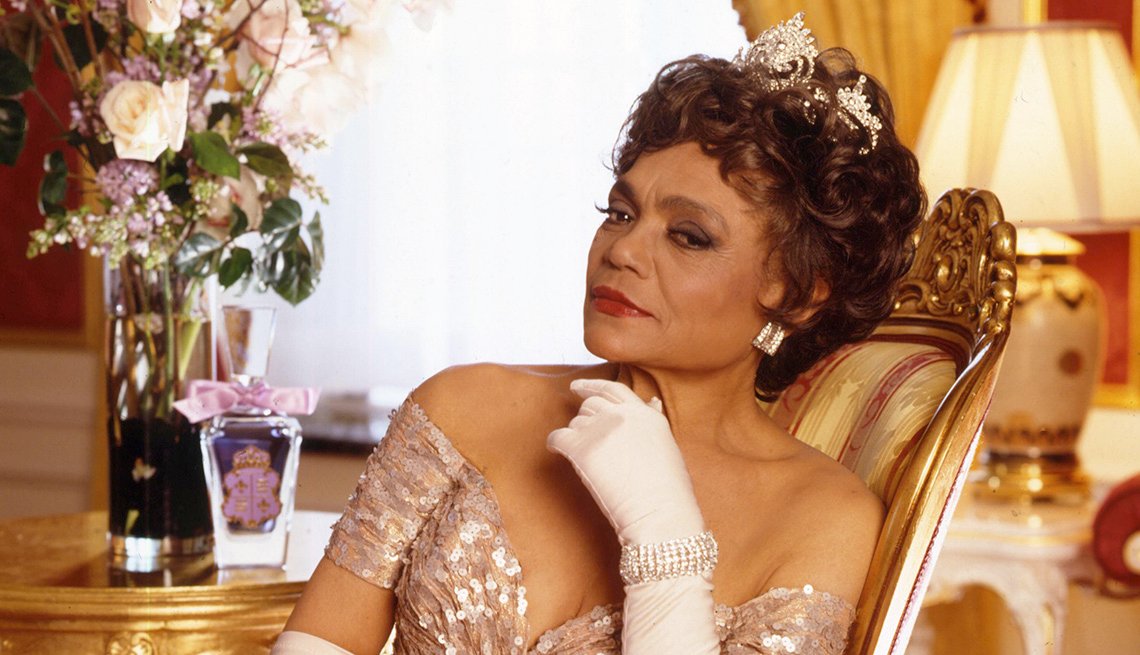
Introduction To Eartha Kitt
Eartha Kitt was more than a singer, actress, or activist—she was a force of nature wrapped in a purr. Born into poverty in the Jim Crow South, she clawed her way to international stardom with a voice that could seduce or scold, a presence that commanded every room, and a fearless spirit that refused to bow to anyone. From Broadway stages to Batman’s lair, from Parisian nightclubs to the White House (where she famously spoke truth to power), Kitt lived a life that reads like fiction but was very real. This article explores her most iconic roles, her unforgettable songs, and the lesser-known details that reveal the woman behind the legend.
The Roles That Defined a Legend
Eartha Kitt’s career spanned six decades, but certain performances remain etched in cultural memory. These roles showcased her versatility, her sensuality, and her unapologetic Black womanhood in an era that often tried to diminish both.
Catwoman in Batman (1967–1968)
When Eartha Kitt slipped into the skintight catsuit for the third season of Batman, she didn’t just play Catwoman—she became her. Replacing Julie Newmar, Kitt brought a feral, mischievous energy that was distinctly her own. Her purr—low, throaty, and dripping with innuendo—turned simple lines into seduction. “Purr-fect,” she’d hiss, and the world leaned in.
What made Kitt’s Catwoman revolutionary wasn’t just the sex appeal (though there was plenty); it was the power. In 1967, a Black woman playing a villain opposite Adam West’s square-jawed hero was radical. Kitt’s Catwoman wasn’t a sidekick or a damsel—she was a mastermind, a thief, a queen. Her chemistry with West crackled, and her physicality—those claw-like gestures, that slinking walk—was pure theater.
Behind the scenes, Eartha Kitt faced racism. The show’s producers were nervous about interracial tension (West and Kitt’s flirtation was daring for network TV). But Kitt refused to shrink. She later said, “I played Catwoman as a woman who knew her worth.” The role made her a pop culture icon and introduced her to a new generation—kids who grew up mimicking her purr long before they understood her politics.
Broadway’s Original Seductress New Faces of 1952 and Beyond
Kitt’s Broadway debut in New Faces of 1952 was a revelation. At 25, she stole the show with “Monotonous,” a sly, sultry number about a woman bored with love. Draped in a simple black dress, she moved like liquid smoke, her voice curling around lyrics like: “I’ve got a man who loves me / He’s got a lot of money / But it’s monotonous.” The audience was hers.
Critics raved. The New York Times called her “electrifying.” The revue launched her career, but Kitt never rested on one triumph. She returned to Broadway in Shinbone Alley (1957), playing Mehitabel, a streetwise alley cat (a role that foreshadowed Catwoman). Her performance of “Toujours Gai” was a masterclass in charm and resilience.
In 1978, she conquered Broadway again in Timbuktu!, a reimagining of Kismet set in Africa. At 51, Kitt played Shaleem-La-Lume, a role written for a younger woman. She didn’t just act—she ruled. Her entrance, draped in gold and feathers, stopped the show. The Times wrote, “Eartha Kitt is a queen, and she knows it.”
Film Roles From St. Louis Blues to The Emperor’s New Groove
Eartha Kitt film career was eclectic. In St. Louis Blues (1958), she played Gogo Germaine opposite Nat King Cole, bringing sass and depth to a supporting role. In Anna Lucasta (1958), she starred as a troubled prostitute, earning praise for her raw emotional range. (Sammy Davis Jr. reportedly said, “Eartha doesn’t act—she is.”)
But her most unexpected triumph came late in life: Yzma in Disney’s The Emperor’s New Groove (2000). At 73, Kitt voiced the deliciously evil sorceress with cackling glee. Lines like “Pull the lever, Kronk!” became instant classics. The role introduced her to millennials and proved her comic timing was as sharp as ever. (Fun fact: Kitt ad-libbed Yzma’s iconic laugh.)
The Songs That Made Her a Siren
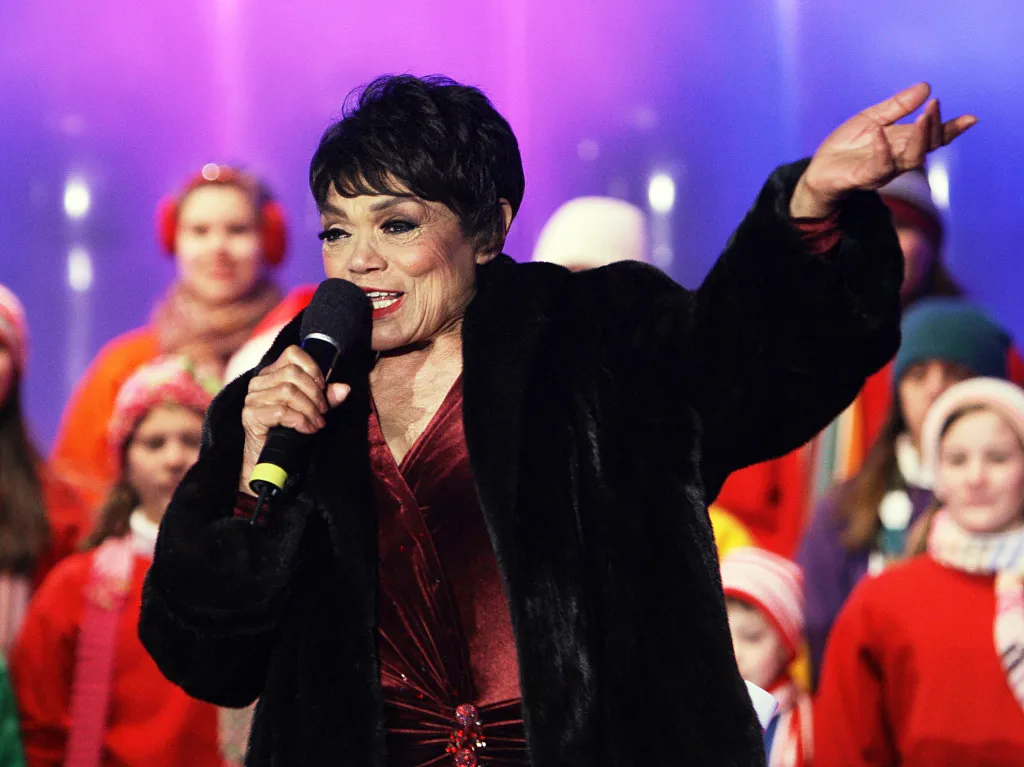
Eartha Kitt didn’t just sing—she seduced with sound. Her voice was a weapon: smoky, multilingual, and impossible to ignore. Here are the tracks that defined her.
“C’est Si Bon” (1953)
Kitt’s breakthrough hit was a French standard she made her own. Recorded in 1953, her version is pure champagne—bubbly, flirtatious, and effortlessly chic. Singing in French with a Carolina lilt, she turned a simple love song into a global sensation. It topped charts in Europe and cemented her as an international star.
“Santa Baby” (1953)
The ultimate Christmas seduction. Eartha Kitt breathy delivery—“Santa baby, slip a sable under the tree for me”—is equal parts playful and predatory. Released in 1953, it was banned by some radio stations for being “too suggestive.” (Kitt laughed: “It’s just a girl asking for presents.”) The song has been covered by Madonna, Ariana Grande, and Taylor Swift, but none match Kitt’s original purr.
“I Want to Be Evil” (1953)
A deliciously wicked anthem. Over jazzy horns, Kitt declares, “I wanna be evil / I wanna spit tacks!” It’s camp, it’s rebellion, it’s Eartha. The song was a cheeky response to her “good girl” image—and a hint at the fire beneath her glamour.
“Uska Dara” (1953)
A Turkish folk song sung in phonetic Turkish, “Uska Dara” showcased Kitt’s linguistic flair. She didn’t speak the language but learned it phonetically, turning gibberish into magic. The track was a hit in Europe and proved her global appeal.
“Champagne Taste” (1960s)
From her cabaret years, this song is Eartha Kitt at her most luxurious. “I’ve got champagne taste / And beer money,” she sings, winking at her rags-to-riches story. It’s a reminder that beneath the glamour was a survivor who never forgot where she came from.
Untold Facts The Woman Behind the Myth
Eartha Kitt’s life was full of secrets, struggles, and triumphs that never made the tabloids. Here are the stories that reveal her true depth.
1. She Was Abandoned at Birth—and Found Her Voice in Cotton Fields
Born Eartha Mae Keith on January 17, 1927, in St. Matthews, South Carolina, Kitt was the child of a Black-Cherokee mother and a white father who denied her. After her mother’s death, she was sent to live with relatives who abused her. As a child, she worked in cotton fields, singing to survive the monotony. “The cotton plants were my audience,” she later said. Those early songs—spirituals, work chants—shaped her voice.
2. She Spoke Truth to Power—and Paid the Price
In 1968, Kitt was invited to a White House luncheon hosted by Lady Bird Johnson. Asked about the Vietnam War, she didn’t mince words: “You send the best of this country off to be shot and maimed. They rebel in the street… No wonder the kids rebel and take pot.” The room went silent. Johnson was furious.
The fallout was swift. Kitt was blacklisted by the CIA, her phone was tapped, and she was effectively exiled from the U.S. for nearly a decade. She worked in Europe, starring in cabarets and films, but the ban devastated her. “I lost my country,” she said. She returned in 1978, triumphant, proving her resilience.
3. She Raised Her Daughter Alone—and Built an Empire
Kitt gave birth to her daughter, Kitt Shapiro, in 1961. The father, real estate mogul John William McDonald, was white—and their interracial marriage was scandalous. They divorced in 1965, and Kitt raised Kitt alone while touring the world. She bought a farm in Connecticut, grew her own food, and taught her daughter self-reliance. “I wanted her to know she could do anything,” Kitt said.
4. She Was a Polyglot—and a Spy?
Kitt spoke four languages fluently (English, French, German, Dutch) and sang in eleven. During World War II, she performed for troops in Europe and was rumored to have passed messages for the Resistance. (She neither confirmed nor denied it, saying only, “A lady keeps her secrets.”)
5. She Never Stopped Reinventing Herself
At 70, Kitt learned to scuba dive. At 75, she recorded a dance album. At 80, she performed in South Africa, her first time on the continent. “Age is just a number,” she said. “I’m still growing.”
Legacy The Purr That Echoes
Eartha Kitt died on Christmas Day, 2008, at 81. But her voice—sultry, defiant, unforgettable—lives on. She was a trailblazer: the first Black Catwoman, the first singer to make “Santa Baby” a standard, the first celebrity to call out the White House and survive.
Her daughter, Kitt Shapiro, now runs Simply Eartha, a lifestyle brand that honors her mother’s spirit. From coffee mugs with “I Want to Be Evil” to scarves inspired by her turbans, the brand keeps Eartha’s flair alive.
In a world that tried to silence her, Eartha Kitt roared. She taught us that glamour and grit can coexist, that a purr can be a revolution, and that a woman who knows her worth never apologizes for taking up space.
You May Also Read: Drew Allar